
I have been immersed in Eddie Stern’s online pranayama training for the past twelve weeks. I first discovered his Breathing App two years ago and, since then, I have practiced resonance breathing almost every day; sometimes for a few minutes, sometimes for much longer.
As part of my own exploration of breath-based practices, I also created an online breathing course for my Hungarian students. While teaching the course, an interesting question arose:
What is the difference between breathwork and pranayama?
Many people use these words as if they mean the same thing. They don’t.
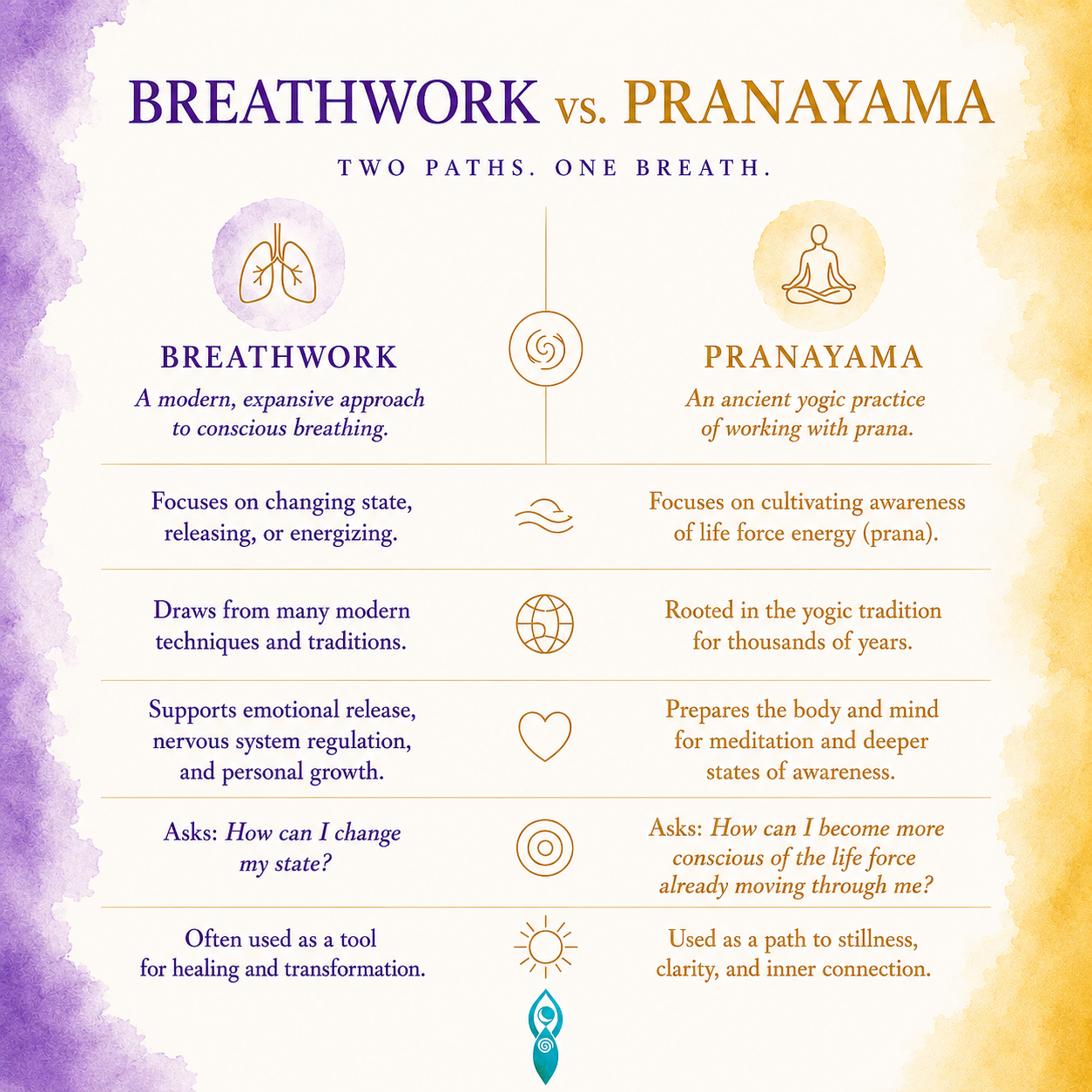
Breathwork is a broad modern term that includes many different breathing techniques. Some are designed to energize the body, some to regulate the nervous system, some to support emotional release, and some to induce altered states of consciousness.
Pranayama comes from the yogic tradition. While it also uses the breath, its aim is not only to influence the body or emotions. Pranayama is the conscious cultivation of prana—life force energy. Traditionally, it is considered a bridge between the body and the mind, preparing us for meditation and deeper states of awareness.
In simple terms:
- Breathwork often asks: How can I change my state?
- Pranayama often asks: How can I become more conscious of the life force already moving through me?
Both can be powerful.
Both can be healing.
But they arise from different lineages and carry different intentions.
After more than fifteen years of teaching yoga, I have come to appreciate both. Sometimes we need a practice that helps regulate an overwhelmed nervous system. Sometimes we need a practice that helps us sit quietly and listen.
The breath can do both.
What has been your experience with breath-based practices?
I’d love to hear from you.
May your breath guide you home,
Viki

